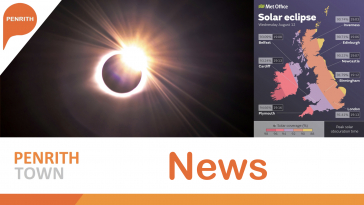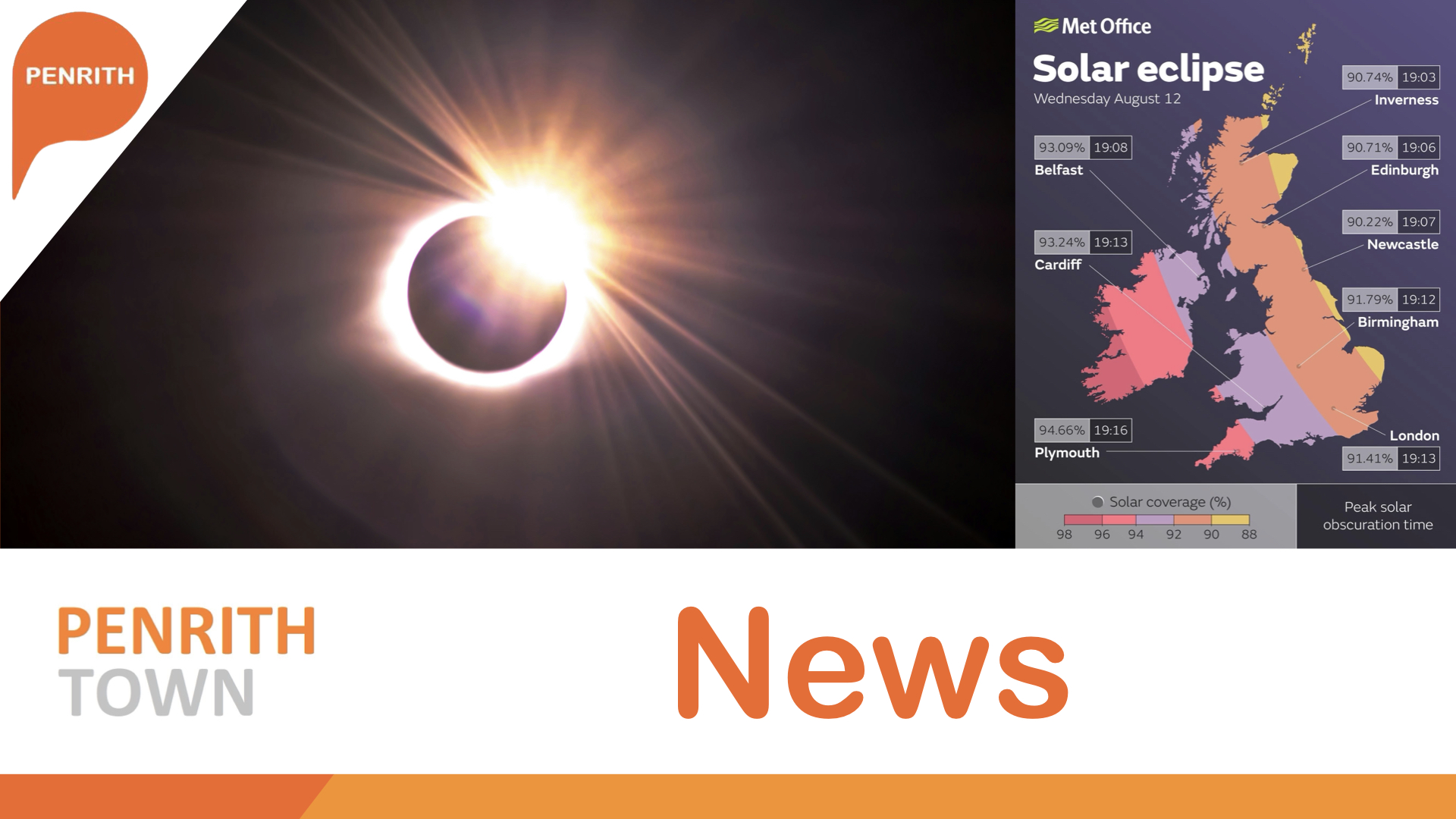
People across the UK and Europe will be looking to the skies on Wednesday evening as the Moon moves between the Earth and the Sun, creating a spectacular solar eclipse.
Locally here in Penrith, we are in for an impressive view, with around 92% of the Sun expected to be obscured at the height of the eclipse.
The August 12, 2026 solar eclipse will be visible across a large part of Europe, with the amount of the Sun covered varying depending on where you are.
In Penrith, the eclipse will begin at around 6.11pm, reaching its maximum at approximately 7.08pm, when around 92% of the Sun will be covered.
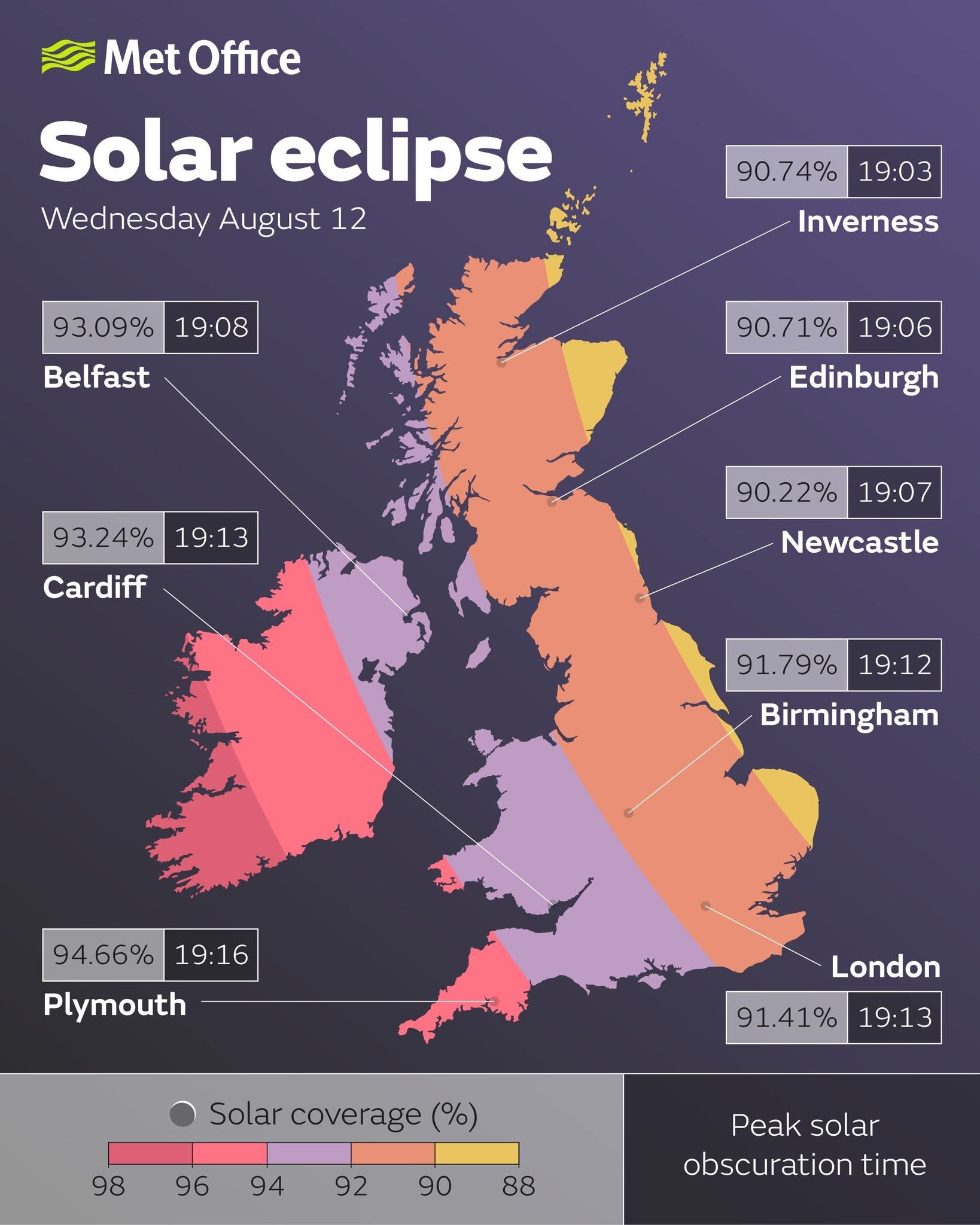
The Moon will then gradually move away from the Sun, with the eclipse ending at around 8.02pm.
With the eclipse taking place during the evening, the Sun will be relatively low in the western sky, making the choice of viewing location particularly important.
Where could you watch it around Penrith?
You don't necessarily have to travel far to get a good view.
Higher ground and open areas around Penrith could provide some excellent viewing opportunities, particularly locations where trees, buildings and hills aren't blocking the western horizon.
Beacon Edge and other elevated viewpoints around Penrith could be worth considering, while those prepared to travel further afield could look towards the more open countryside around Shap or Hartside.
Even your own garden could be a good viewing location if you have a clear view towards the west.
While the sight of more than 90% of the Sun being covered will be spectacular, it is still not safe to look directly at the Sun.
The Royal Observatory Greenwich has stressed that ordinary sunglasses do not provide sufficient protection.
Anyone watching the eclipse should use certified eclipse glasses or a proper handheld solar viewer.
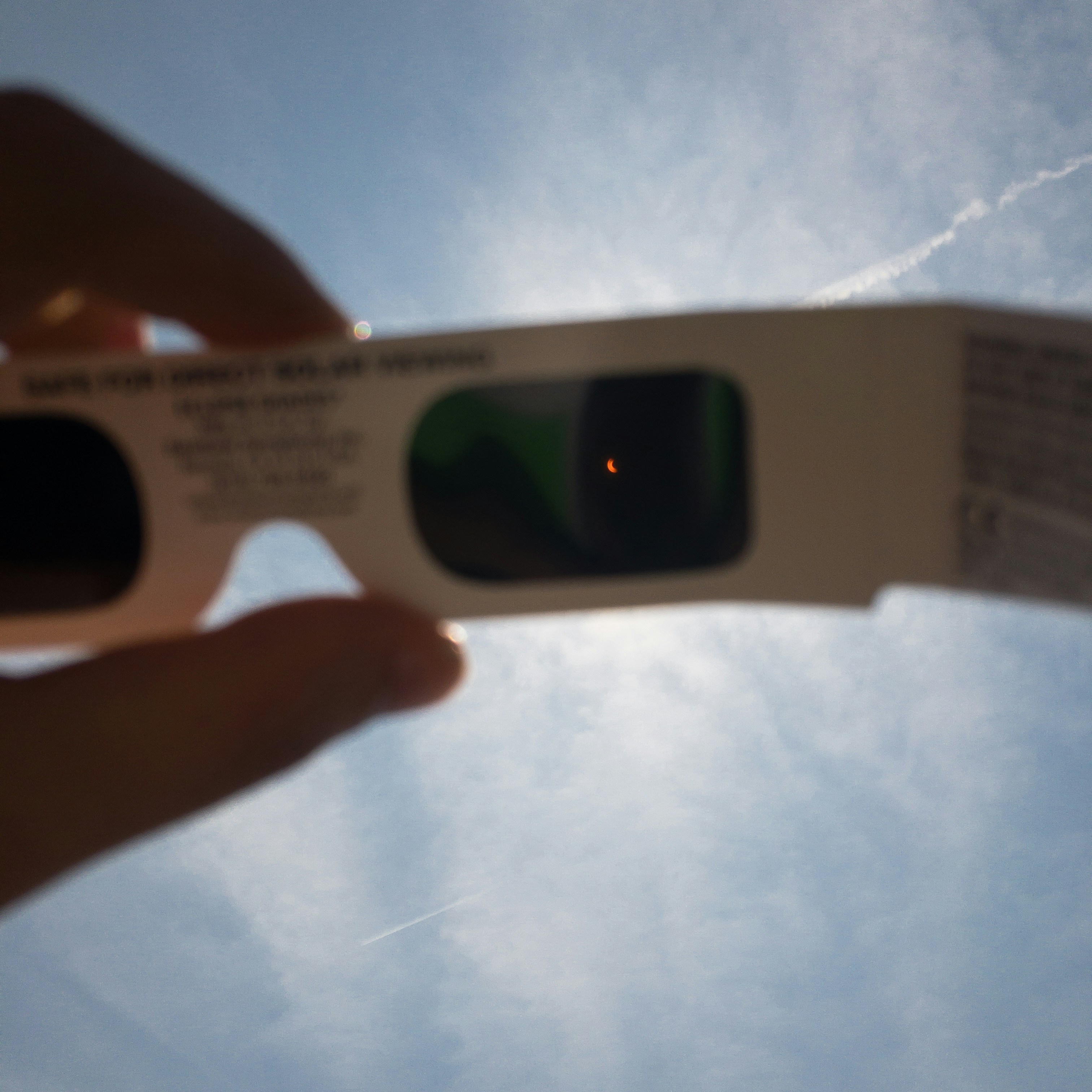
Even when most of the Sun is hidden, the remaining bright sunlight can cause serious and permanent damage to your eyes.
If you don't have suitable eclipse glasses, there is another option.
An indirect viewing method, such as a simple pinhole projector, allows you to watch an image of the eclipsed Sun without looking directly at it.
NASA recommends this method. A small hole punched through a piece of card or aluminium foil can project an image of the Sun onto a nearby surface.
With your back to the Sun, you can watch the projected image safely.
Never look directly through the pinhole at the Sun.
Be careful if you're using your phone
The eclipse will undoubtedly tempt people to reach for their smartphones, but there is a warning for anyone hoping to film or photograph it.
A smartphone camera's lens concentrates sunlight onto the tiny camera sensor. Pointing it directly at the Sun for an extended period can potentially overheat and permanently damage the sensor.
Anyone using specialist cameras, binoculars or telescopes should only do so with a properly certified solar filter designed for that equipment.
Never attach binoculars, telescopes or telephoto lenses to a phone without the correct solar filter.
And don't look at the Sun through the optical viewfinder or lens of a camera, telescope or binoculars, even while wearing eclipse glasses. The concentrated sunlight can damage the equipment and, more importantly, seriously injure your eyes.
Will the clouds spoil the show?
The current forecast offers some hope for eclipse watchers, although there is still plenty of time for conditions to change.
Penrith could see some light patchy cloud on Wednesday evening, with cooler conditions beginning to move in from the north-west after another couple of warm days on Tuesday and Wednesday.
That means there could be some cloud around as the eclipse takes place, but at this stage there is no certainty that it will spoil the view.
With the eclipse occurring relatively low in the western sky, even small breaks in the cloud could provide a window to see the Moon passing across the Sun.
For anyone planning to watch, it will be worth keeping an eye on the forecast during Wednesday and having a location with a good western view in mind.
The Perseids provide a second reason to stay out
There is an added bonus for anyone planning to stay outside after the eclipse.
The same night coincides with the peak of the Perseid meteor shower, one of the most famous and active meteor showers of the year.
Once the Sun has set and the sky becomes properly dark, anyone watching from a darker location away from Penrith's artificial lights could have the chance to see meteors streaking across the sky.
So, weather permitting, Wednesday could provide a remarkable evening of astronomy — beginning with a deeply eclipsed Sun and potentially ending with shooting stars.
Although Wednesday's event will be a partial eclipse from the UK, it is still one of the most significant solar eclipses Britain has seen since the famous total eclipse of 1999.
The next total solar eclipse visible from the UK is not expected until 2090.
There will be other significant partial eclipses before then, including one in 2081, when up to 99% of the Sun could be obscured from parts of Britain.
But for anyone in Penrith, Wednesday's eclipse represents a rare opportunity to see almost the entire face of the Sun disappear behind the Moon.
Royal Observatory Greenwich astronomer Dr Greg Brown has described the eclipse as the best the UK has seen since 1999 and said Britain won't get a better one until 2081.
He also stressed that, despite how close the eclipse will get to totality, it will not be safe to watch with the naked eye.
So, where will you be watching the eclipse from?



 Then select "Add to Home Screen"